Blogs
What Dignified Menstruation Means to Me: Sandra Armstrong
Personal Blog ·
What Dignified Menstruation Means to Me
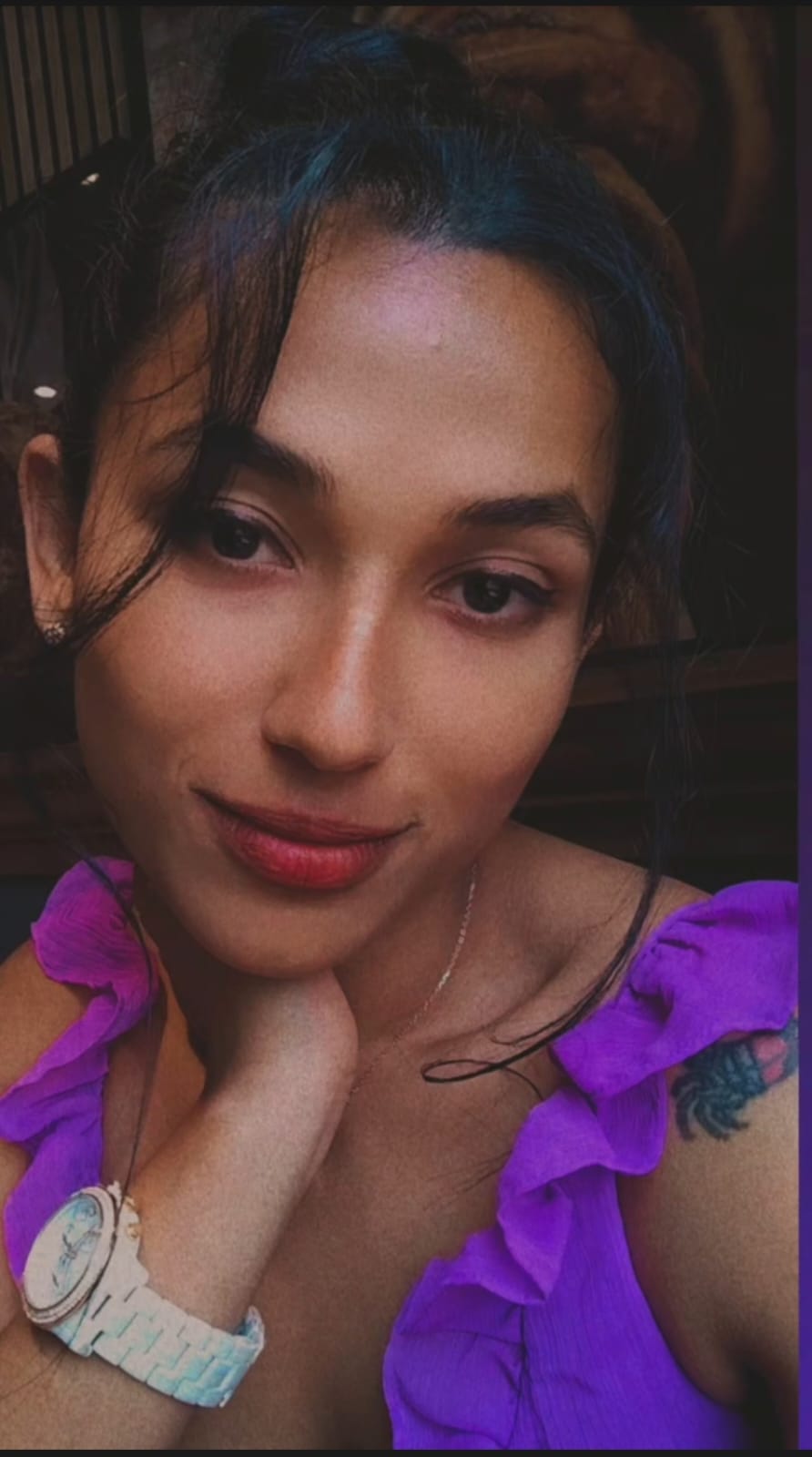
Written during my internship at the Global South Coalition for Dignified Menstruation · 2026: Sandra Armstrong
Menstruation. Even typing that word feels like a small act of intention. For most of my life, it was not a word I said out loud comfortably. Not at home, not at school, not in a group of friends. It was whispered around, referred to sideways, wrapped in euphemisms — "those days," "that time of the month," something you signaled rather than named. And I think that discomfort, that habit of lowering your voice or changing the subject, says everything about how we have been taught to relate to it.
I was lucky. My home was different. Menstruation was not treated as something shameful or impure within my family — I did not personally grow up with restrictions placed on me because of it. But I grew up surrounded by a wider world that told a different story. I heard from schoolmates whose mothers kept them out of the kitchen during their menstruation. I heard from aunties about girls not being allowed into temples. I watched the rituals that surrounded a girl's first menstruation — sometimes celebratory, sometimes isolated, often both at once — and I noticed how all of them, in their different ways, marked menstruation as something other. Something that required a special response. Something that sets a girl apart.
I do not want menstruation to be treated as something to hide. But I also do not want it to be something to hype. I simply want it to be normal.
What "normal" actually looks like
This is the heart of what I believe, and what drew me so strongly to the work of the Global South Coalition for Dignified Menstruation. The word in their name — dignified — is not about making menstruation a grand statement or a cause for celebration. It is about making it unremarkable in the best possible sense. Something that menstruators can move through without shame, and something that non-menstruators can understand without discomfort, without awkwardness, and without making it strange.
Because here is what I have noticed: both extremes do harm. Treating menstruation as something dirty or forbidden pushes it into silence and exclusion. But over-dramatizing it, turning it into a spectacle or a performance, can also make menstruators feel reduced to their biology. What people who menstruate most need — what I most need — is simply consideration. Quiet, matter-of-fact consideration. The same kind you would extend to anyone going through something physically demanding.
For some, it is genuinely hard
I want to be honest about something, because I think it is important. Menstruation is not the same experience for everyone. I have had friends who spent the first day of their period curled up in bed with stomach cramps so severe they could not attend class. Friends who vomited. Friends who ran fevers. For them, "just getting on with it" was not always an option — and the pressure to do so anyway, to hide the pain and perform normalcy, added its own layer of suffering.
This is where consideration becomes concrete. It means understanding that for some people, menstruation is genuinely physically difficult — not as a weakness, not as something to pity, but as a reality that deserves acknowledgement. A friend checking in. A teacher allowing a student to rest. A workplace policy that does not require someone to explain and justify their pain. These are small things. They are also not small at all.
And importantly — this consideration does not need to be loud. It does not need to be turned into a campaign or a statement. The best version of it is just someone thinking: this might be a hard day for her, let me be a little more flexible. That is it. That is enough.
What GSCDM means to me
When I joined this internship, I came in thinking I had a reasonable understanding of Human rights and SGBV issues. I learned about menstrual discrimination, about girls missing school, and about the lack of clean facilities in many parts of the world. What I did not fully appreciate was how much of the problem lies not in infrastructure, but in attitude.
GSCDM's mission is to dismantle the systems — institutional, structural, cultural — that take away the dignity of people who menstruate. Its founder Dr. Radha Paudel, a survivor, and a nurse from Nepal, has built something that center's a deceptively simple idea: that menstruators of all identities deserve to live with dignity throughout their lives. Not just access to products. Not just cleaner toilets. Dignity.
What this internship has given me is language for things I always felt but could not quite articulate. The feeling that something was wrong with being asked to stay out of the kitchen. The discomfort with how some rituals around a first period felt less like celebration and more like marking a girl as different, as something to be managed. I did not have the words before. Now I do — and with words comes the ability to think clearly, to have conversations, and to change things.
I was not the girl kept out of the kitchen. But I knew her. And I think about her often — about how much effort it takes to carry on normally when the world around you insist that you are not, right now, quite normal.
The world I want
It is not a complicated world, actually. It is one where a girl can say the word "menstruation" in a normal voice and no one flinches. Where a person having a difficult menstruation day can say so without embarrassment, and receive a kind, low-key response. Where those who do not menstruate understand it as a biological reality — one that is sometimes easy and sometimes hard — and extend the same quiet decency they would to any other human experience.
But I have learned through this internship that what feels like a personal wish is actually a legal and moral claim. GSCDM grounds dignified menstruation explicitly in human rights — the rights to dignity, equality, freedom, and non-discrimination. Its framework names menstrual oppression, from the girl kept out of the kitchen to the woman denied workplace consideration, as a form of gender-based violence. And it holds that this dignity is not something a person earns by managing their menstruation discreetly — it is something every menstruator is entitled to from the beginning of their life to the end, what the coalition calls "from womb to tomb."
That framing changed something for me. The restrictions I heard about from friends and aunties were not just cultural habits or matters of etiquette. They were denials of rights. Naming them that way does not make the conversation more complicated — it makes it more honest.
No shame. No spectacle. Just normal.
That is what dignified menstruation means to me. And working with GSCDM has made me more certain than ever that this kind of normalcy is worth working towards — one honest conversation at a time.