News
Kathmandu DECLARATION on Dignified Menstruation: 7th International Dignified Menstruation Day || Learning Conference

7th International Dignified Menstruation Day: Learning Conference on Dignified Menstruation
Kathmandu, Nepal | 8–10 December 2025 | Venue: The Malla Hotel
DECLARATION
Conference context
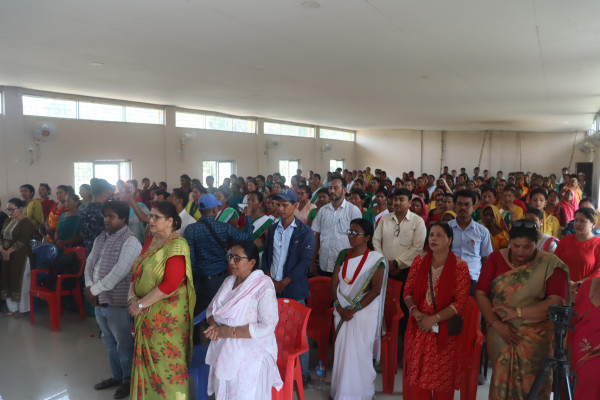
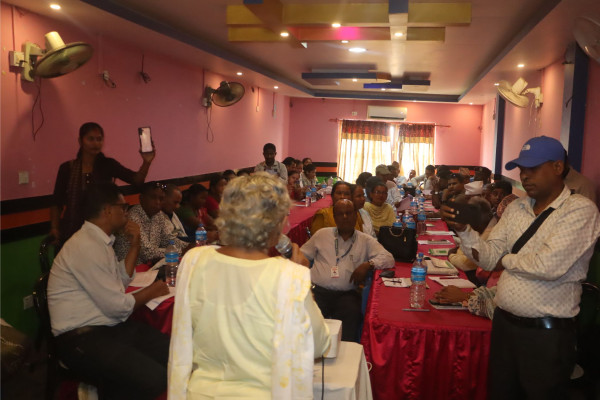
The Learning Conference on Dignified Menstruation 2025 was convened in Kathmandu, Nepal, from 8–10 December on the occasion of the 7th International Dignified Menstruation Day on the theme “Dignified Menstruation: Reclaim inherent dignity, equity, and inalienable rights”.
Over 140 participants from 21 countries from all around the world met to share insights and lived experiences on various dimensions of menstrual discrimination.
Led by the Global South Coalition for Dignified Menstruation (GSCDM) and co-organized with the National Youth Council of Nepal and MenEngage Alliance (Global), the conference underscored that ensuring Dignified Menstruation requires coordinated systemic change across sectors and societies by cultivating equal power relations, dismantling patriarchy, and promoting inclusivity among menstruators and non-menstruators in all diverse settings.
Preamble
We affirm that menstruation is an inevitable phenomenon. Menstrual discrimination is a complex and multifaceted issue. We recognize that the dignified menstruation framework is a decolonized, inclusive, life-cycle, and human rights-based approach that should be incorporated into diverse settings, addressing the fact that menstruators are everywhere.
We further acknowledge the conference’s broad thematic focus on global mapping of menstrual discrimination, its role in power construction, patriarchy, and exclusion. Further, such menstrual and gender stereotypes cause sexual and gender based violence in health, education, SRHR, including STI and HIV, LGBTQIA+, disability, climate, pandemics, and humanitarian settings. As a result, menstruators are utilizing undignified menstrual products and WASH facilities. The sessions also explored how art and literature, engagement of children and non-menstruators, religious groups and leaders, and media can play a role in dismantling menstrual discrimination. Dignified menstruation was also discussed as a political agenda, highlighting the role of government and parliamentarians in transforming the landscape of policies and programs that cascade into the individual level.
The three days of discussion ended with a Call to Action attached below.
Call to action
Grounded in the Universal Declaration of Human Rights 1948 and guided by international human rights instruments and commitments, including CEDAW 1979, the Convention on the Rights of the Child 1989, the ICPD 1994, the Beijing Platform for Action 1995, the Sustainable Development Goals 2015, the UNCRPD 2006, WHO’s Global SRHR Strategy, relevant resolutions of the UN Human Rights Council, and the Paris Agreement, we present the following declaration as a collective commitment to uphold dignity, equity and inalienable rights, for all menstruators in their full diversity.
- “Menstrual discrimination, historically ignored, misunderstood, and minimised, must be recognised as a root driver of unequal power relations, patriarchy, and exclusion. It should be addressed as a distinct form of discrimination, rather than subsumed under ‘harmful traditional practices.’ as it exists globally in multiple forms and intensities.
- Menstrual Discrimination needs to be dealt with as a cause and outcome of sexual and gender based violence, including child marriage.
- Adapt Dignified Menstruation as a decolonial framework that centres lived realities, shifting power and agency with a lifecycle approach.
- To accelerate inclusion and intersectionality, reform the categorisation of the human population as menstruators and non-menstruators.
- Dignified Menstruation is an integral part of child rights. Harmful masculinities must be transformed in the primary education curriculum, as well as in media and the arts.
- Dignified Menstruation to be considered as à powerful entry point in all conversations, in SRHR, including STIs, HIV, and CSEs.
- Integrate the Dignified Menstruation framework into policies and programming related to disability rights, LGBTQIA+ rights, and elderly rights.
- Centering Dignified Menstruation framework into all phases of climate disasters, pandemics and humanitarian settings.
- Apply the menstrual dignity lens, “menstrual talk, dignity first,” across the conversation of WASH initiatives, menstrual products, including tax.
- Include strategic actions to address discrimination related to menstruation and menopause in formal and informal workplaces including sports.
- The 14th day of the 16 Days of Activism Against GBV, to be marked as “International Dignified Menstruation Day”, endorsing Dignified Menstruation as a human right.
- Centering Dignified Menstruation into at least nine SDGs (Goal 1 ( No Poverty), Goal 2 (Zero Hunger), Goal 3 ( Health), Goal 4 (Quality Education), Goal 5 (Gender Equality), Goal 6 (Clean Water and Sanitation), Goal 8 (Decent Work), Goal 12 ( Responsible Consumption), Goal 16 ( Peace and Justice), Goal 8 (Decent Work)) to strengthen interventions targeting SDG 2030.